The Road to PUGG
Number 1. INVENTING
I was born on February 11th and, when old enough to know, was disappointed because I had fallen one day short of Abraham Lincoln's birthday. That could have portended great things for me. Then I read a biography of Thomas Edison, born February 11th. He was an inventor. And I thought inventor eh? That could have been something to look forward to, probably falling somewhere behind my first choice, big league ball player, and my second choice, big league ball player. I was ten or eleven then and that was the last time I thought about inventing until I invented the pop-up soccer training goal at age 47.
Number 2. FIRST BALL
The first time I was aware of "soccer" was in Portugal in the early fifties. Futebol was the word. We were there for about four years. I was just a tike and the ball in the court yard was big, brown, and heavy. That same ball was the object of desire for the men in green and red and their opponents who wore stripes of black and white. We, myself and some neighborhood boys would lie on our stomachs to watch under the fence. It was playing with those boys in the town of Vila Franca that I became "o Americano". I never saw soccer played again until I went away to high school (family lived in South America- Venezuela – baseball country).
Number 3. HIGH SCHOOL
Sports was a requirement at school which was a great thing for me. I would play anything, which became for many years my way of joining in; bonding being the universal gift of athletics. I liked to run and soccer was a perfect sport for a fast kid without a lot of height or bulk. That time at school would be formative, not only in my near future experience but would reappear serendipitously twenty-five years later. That's in a later paragraph.
Number 4. WASHINGTON DC
My high school teammate and currently oldest friend convinced me to apply to GWU. He answered yes when I asked if they had a soccer team. He wasn't all wrong because indeed they had a club team that was scheduled to play in the DC area's men's league. We played the Bavarians, the British Lions, the Pan American Union. I got some real learning that year!
Number 5. A CHAMPIONSHIP
My last year (1968) playing soccer at GWU we won the Southern Conference championship by beating The Citadel. It was a long bus ride down to Charleston, South Carolina. A roadside diner refused to serve us. Not sure why although we were a pretty motley crew of boys from four continents. In the game we scored ten at least. Not sure if they scored any. Bus ride home was also long.
Number 6. GAP YEAR
Before that championship season, I had taken a gap year to serve in VISTA, Volunteers In Service To America. We trained to work in the migrant camps where Americans lived in shacks with no running water and dirt floors and were destined to spend their lives traveling South to North picking fruits and vegetables for our national table. Oddly enough, following training, I was sent to teach in a head start program in St. Croix, US Virgin Islands. Go figure! Prior to that experience, I really had no idea what four and five year old children were all about. I hope we added positive experiences to their very meager lives. I learned much from them. Soccerwise, there was a Norwegian guy living on the island who organized a weekly pick-up game. I joined sporadically.
Number 7. PEACE CORPS
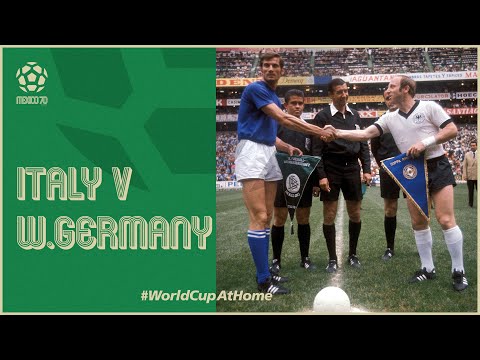
After GWU, I went into the Peace Corps, and was sent to Costa Rica. We were given jobs to work with small corn and bean farmers to increase their yields, but looking back it was a system to wean farmers from using their own seed from their previous crop and having them buy into using government hybrid seed which produced higher yields but the corn kernels could not be used to seed their next season's crop. In a way it was a system of debt in exchange for higher production. In terms of soccer, I played a few times but the best soccer moment I had while in Costa Rica took place one day when I had the pleasure of listening to the semi-final 1970 World Cup match between West Germany and Italy. A small farmer up in the coastal foothills had a transistor radio. I had ridden my horse to his farm to discuss our program (I'm afraid of horses but Raul and I got along very well and I even road him bareback a few times). The broadcast of the game was in Spanish and it ended up 1-1 after ninety. In the next thirty minutes five goals were scored, the lead changing twice. It was the first World Cup game I heard live. It's worth looking up if you have a chance.
Number 8. WATCHING SOCCER
It wasn't until the eighties when soccer got back into my life. We had moved back to Boston and my wife started a business in Cambridge. Crossing the Charles now and then from our home in Brookline, I found Harvard Soccer and what I found was a really great game to watch. On beautiful fall days I could station myself anywhere I wanted around the periphery of Ohiri Field. Jape Shattuck had put together a dynamic team of international and domestic kids. The quality of play was far superior to what I remember of my GW days. And there were fans! It was there I met John O'Keefe, publisher of Soccer New England, who told me if I wanted to watch college soccer at its best and most popular, I should drive down to Storrs to see UConn. I did and was blown away because walking from the parking lot to the stadium I could hear Springsteen singing Born In The USA. And when the built-for-soccer stadium appeared I saw about six thousand fans prepping to watch Joe Morrone's Huskies play Alabama A&M. Wow how things had changed. I felt like Rip Van Winkle. Soccer had arrived! And I became a fan. I followed the Harvard team and went to two of their NCAA semifinal games. I even considered becoming a soccer writer/reporter until, after a crushing close loss to Duke, I asked Coach Shattuck how he felt and he said "like s***". At that moment I knew soccer reporter wasn't my cup of tea. But those years following the college game around Boston became a fall passion.
Number 9. WORLD CUP
During my earlier days at GW my teammates and I watched a film of the 1966 World Cup played in England. American television had not found a way to offer the tournament to the public. The final between England and Germany was broadcast after the fact as a black and white recording (which I did not see) but the documentary at the circle theatre on Pennsylvania Avenue presented the action cinematically, full of color and sound that so excited me that I predicted the United States would win the World Cup in twenty years. Boy, was I deluded! But not so deluded that twenty years later I was convinced that the USA should at least hold the World Cup.
Most people thought hosting the cup was something a country earned and in 1985 it was only known that Mexico would host in '86 and Italy in '90. In '94 it was scheduled to take place somewhere in the western hemisphere. I knew that and I took on the task of making sure the good old USA would be the 94 host. I would write a song and my friend Tony down in Memphis would record the song. The title you ask? Well quite simply 'Let's Bring The World Cup To America'. A day in the studio with professionals, who could make anything sound good and suddenly I had a song. I printed about 500 45's with the intention of sending them out to radio stations. All in all, it was bad idea but a great experience watching the producer, Jack Holder, doing his best to create a piece of music from what I gave him. By the way, if anybody wants one, I've still got a box of two hundred fifty 45's in storage. Nevertheless, let me remind you that following the 86 Mexico World Cup, the decision came down; World Cup '94 was coming to America. Mission accomplished!
Number 10. MEXICO '86
In the summer of '86 I was in transit at the Houston Airport on the way to my first World Cup. Sitting nearby were three Englishmen, Melvin, Marc, and Bill. Like me, they were flying to Monterey where England would play all group matches. The deal was I would rent a car and they would let me hang out with them. There really wasn't a deal but that's how it turned out. One day we drove up to Saltillo, a sleepy village hosting the English team. Security was virtually non-existent. We entered the hotel and stayed the day surrounded by the English players. We swam in the pool with several of them and later, from the hotel lounge, we watched Uruguay lose badly to Denmark. Brian Glanville, renowned veteran soccer writer, sat nearby watching the trounce.
The first game we attended was Morocco-Poland. The ticket purchase was easy; we just walked up to the counter and paid. The game itself was a nil-nil draw. Nothing to get excited about. Nevertheless, after the game we saw England Manager Bobby Robson in the parking lot surrounded by just a few Mexican reporters. Being close enough to hear their question, I offered to translate for a reporter when he asked Robson, "What do you think of the upcoming game with Portugal?" Robson replied, "I think it hasn't been played". Robson autographed my ticket. I might still have it. Not sure.
Absent the USA, I was pulling for Mexico (and England) and from a bar stool in the Mexico City airport I saw a goal by Manuel Negrete that captured the imagination of the soccer world. A couple of delicate and delicious volleys between Negrete and Aguirre just outside the box ended with a high scissors from Negrete's left foot resulting in a truly, truly, spectacular goal.
Number 11. MARADONA
In the years following Mexico 86, I would sometimes tell the story of attending the Argentina – England quarterfinal match. Argentina, '78 winner and the home of the first football league outside of the British Isles, and England, '66 champion and soccer's birthplace and winner of a lousy and deadly war over control of a handful of islands at the tip of South America, would meet on neutral grounds to determine the tournaments third semi-finalist. I say neutral because neither team was at home. Yet, with Maradona on the field, and the western hemisphere's reputation on the line, and the shared language of Argentina with their host, it didn't take much to hear who the 114,000 plus fans were supporting. Maradona scored twice early in the second half, the first being the Hand of God goal and the second, the Goal of the Century. I'm sure many of you already know all that but for the sake of my grandchildren I felt compelled to provide proof of my presence on that memorable day. So, thirty years later with the help of Melvin Wingfield, I was able to get his and Marc's and Bill's signature on a document attesting to our attendance. Here's the link to that document.
Number 12. PUGG IS BORN
If I said earlier that the PUGG goal was my first invention, it wasn't that I hadn't tried to design something before. In 1989 I hired two MIT graduate students to develop software and hardware for a standalone retail name acquisition system for my wife's store. Good idea, bad timing. After a failed year of fruitless work, I took the loss and decided to enjoy life by playing some pick up soccer at a regular summer game. It was the type of game where doctors and carpenters and dishwashers and guys called Pele or Cameroon show up for some time on the ball. And that's where I was struck by a flash of inspiration. The pop-up goal was born and I branded it PUGG. Its thirty-year history is proof that failure is often and sometimes even a required precursor to success.
Number 13. THE FUTURE OF PUGG
It's now 2025 and I'm asking myself what to do with the PUGG brand to ensure its prosperity in the coming decades. My answer is to find a way to share the ownership of the brand with the coaches, players and dealers who have made PUGG a success. I think Pugg Sport International, Inc. is the perfect vehicle to do that work.
- Thomas Edison Portrait
- Bobby Robson Portrait
- 1970 World Cup Semi-Final Thumbnail
- 45 RPM Vinyl Record
- Soccer Stadium (Rawpixel Public Domain)
- Soccer Ball (PublicDomainPictures)
- Historical Soccer Crowd (Picryl)
- Football Field/Goal (Rawpixel)
Right-click and "Save as" any image above to download for your site.